
The Short Answer
Garage door springs almost always give you warning signs before they fail completely: a visible gap opening up between the coils, a door that hangs crooked when it opens, a loud bang from the garage, or a door that suddenly feels twice as heavy to lift by hand. If you notice any of these, the spring is wearing out, not just "a little noisy." Catching it at this stage means a planned spring replacement instead of a door that slams shut on its own or a cable that snaps under tension.
Before You Start: Do This Safely
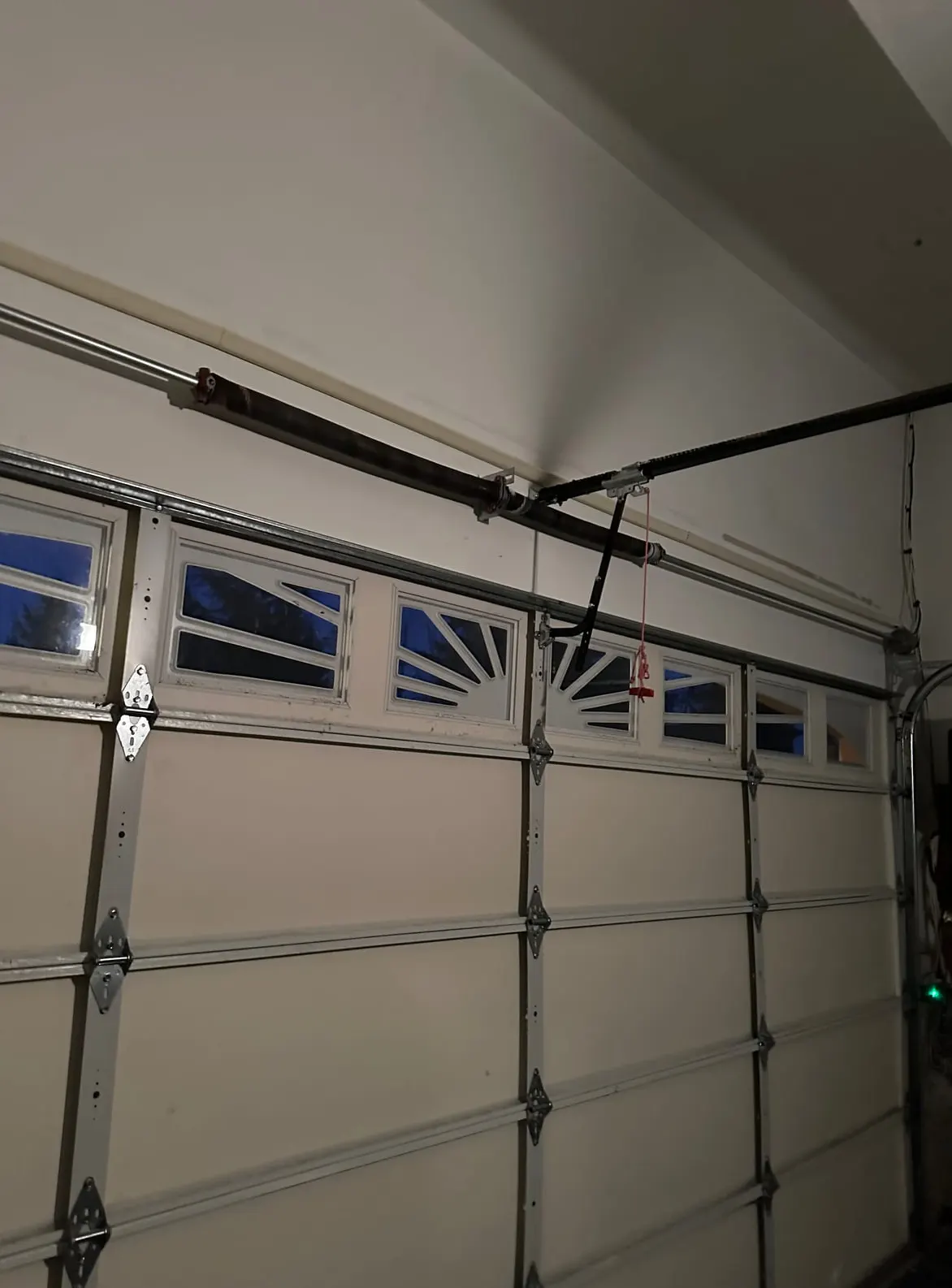
Close the garage door fully and disconnect the opener by pulling the manual release cord (usually a red handle hanging from the trolley). Springs under tension can cause serious injury if they let go while you're working near them, so this checklist is about looking and listening, not adjusting or removing anything yourself.
The Walk-Around Checklist
1. Look at the coil spacing on torsion springs
Torsion springs sit on a bar above the closed door. Healthy coils sit tight against each other with no daylight between them. If you see a gap opening up between coils, or the coils look stretched out unevenly along the bar, the spring has lost tension and is close to the end of its life.
2. Check if the door hangs level when it's open halfway
Disconnect the opener and lift the door by hand to the halfway point, then let go gently. A door with healthy springs should stay roughly where you left it. If one side dips or the whole door sags and starts sliding down on its own, one spring is carrying more load than the other, which usually means it's weakening or has already lost coils.
3. Listen for a bang, pop, or loud creak
A sudden bang from the garage, especially one that happens when no one is opening or closing the door, is often a spring shifting position or a coil breaking loose. A slow creak or groan every time the door moves is a sign the spring is working harder than it should to compensate for lost tension.
4. Lift the door by hand and gauge the weight
With the opener disconnected, lift the door yourself. It should feel light and balanced, almost like it's helping you. If it suddenly feels heavy, uneven, or like you're fighting it the last foot before fully open, the springs aren't doing their job anymore and the opener has been quietly picking up the slack.
5. Watch how the opener behaves
An opener straining against a weakening spring will often groan, run slower than usual, or trip a breaker because the motor is drawing more current to compensate. If your opener has suddenly gotten noisier or less responsive with no other explanation, check the springs before assuming the opener itself is failing.
6. Inspect the cables near the bottom brackets
Follow the lift cables down to where they attach near the bottom corners of the door. Fraying, looseness, or visible rust on these cables often shows up alongside spring wear, since a struggling spring puts uneven strain on the whole cable and pulley system.
7. Notice if the door closes faster than it used to
A door that used to ease down gently but now drops the last few feet with more speed and a harder thud is losing spring tension. The spring isn't providing enough resistance to control the descent, which puts more wear on the opener's gears and increases the risk of the door coming down hard on anything underneath it.
8. Check extension springs for stretching or rust
If your door uses extension springs (the long springs that run along the horizontal tracks rather than a bar above the door), look for stretching beyond their original length, rust spots, or any sign the coils are pulling apart unevenly. Rust is a bigger issue here given how much humidity and heavy rain this area sees through the warmer months, and it accelerates wear on any exposed metal hardware.
Why This Matters More Heading Into Winter
Cold temperatures make steel more brittle, and a spring that's already weakened by months of humidity, rust, or simple age is far more likely to fail outright once icy mornings set in. A lot of the housing stock in this area still runs original springs that have never been serviced, and those are exactly the ones worth checking now, before the first hard freeze puts extra strain on tired metal.
When to Call Upper Marlboro Door & Opener
If you spot gaps in the coils, a door that hangs crooked, or cables showing wear, it's time to call rather than keep testing it yourself. Our Garage Door Spring Replacement service handles torsion and extension springs correctly and safely, including matching tension on both sides so the door doesn't go back to favoring one corner. If everything looks borderline but you're not sure, our Garage Door Maintenance visits check spring tension, cable condition, and hardware wear in one trip, so you know exactly where things stand before winter weather makes the decision for you.
If your garage door in Upper Marlboro, Bowie, Largo, or anywhere nearby is showing any of these signs, give Upper Marlboro Door & Opener a call before the springs make the decision for you.