
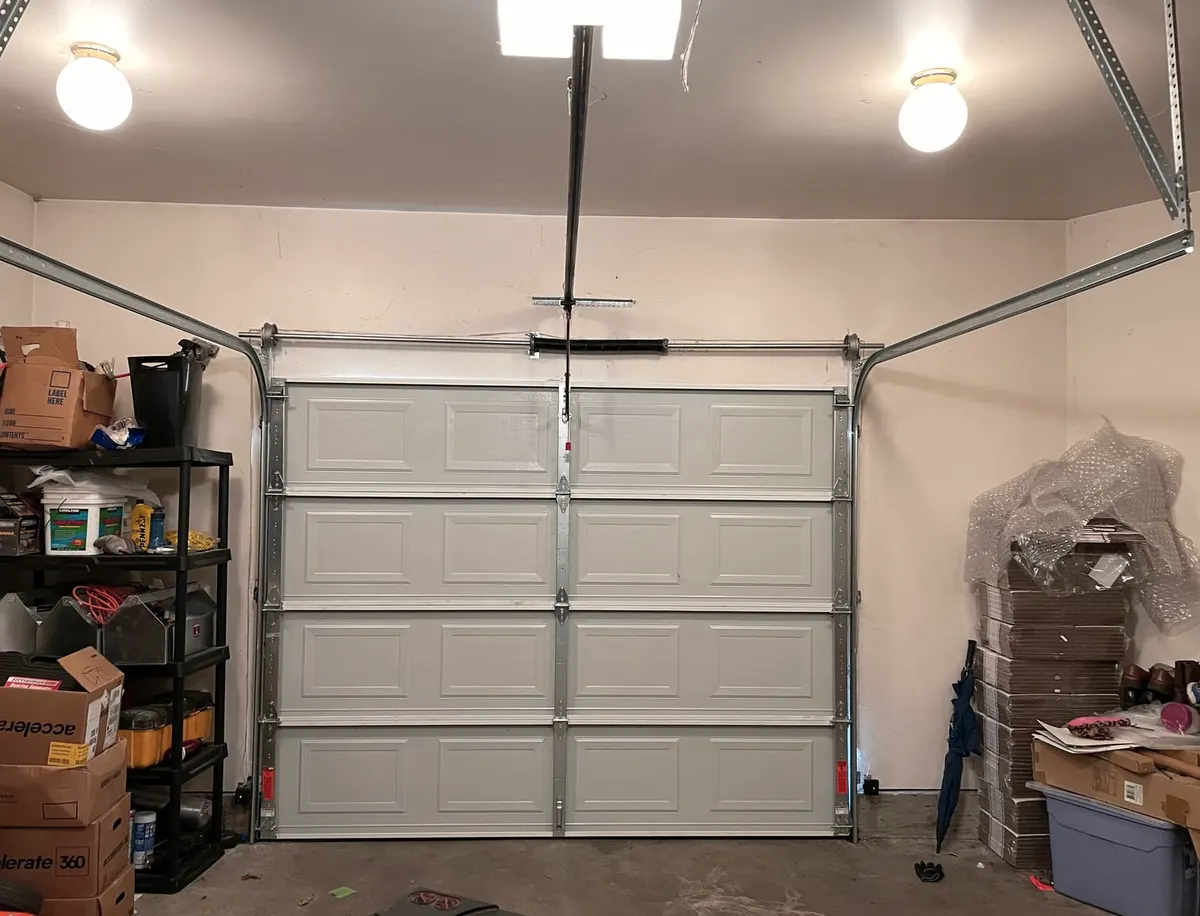
You're out in the driveway on a damp November morning when you notice it: a soft bubble of paint near the bottom corner of your garage door, and under it, a thin line of rust working its way along the seam. Or maybe it's the opposite problem — a wood door that's swollen just enough that it drags and groans every time the opener pulls it up. Either way, the moment you spot it, you start wondering if the real issue isn't wear and tear, it's that the door was never quite right for this climate to begin with.
Here, the swings matter. Humid, sticky summers followed by icy winters, heavy rain, and the occasional coastal storm put real stress on garage door materials, and a mix of older and newer homes in the area means plenty of doors that were installed decades ago under very different standards. If you're replacing a door, or just trying to understand why yours is struggling, it helps to know what each material actually does under this kind of pressure.
Steel
Steel is the standard for a reason. It's affordable, holds up well against wind and impact, and modern steel doors come with factory finishes that resist the rust bubbling you might be seeing on an older door right now. The trade-off: thinner, uninsulated steel doors can dent from hail or a stray basketball, and if the finish is ever scratched through, humidity and standing rain will find that exposed metal fast. Insulated steel (look for a door with a polystyrene or polyurethane core) handles temperature swings and condensation far better than a hollow single-layer panel.
Wood
Wood doors look great and can be a strong match for older homes with more traditional architecture. But wood is the material most affected by this region's humidity and rain cycles. It absorbs moisture in summer, dries out in winter, and that expansion-contraction cycle leads to warping, sticking, and eventually rot at the bottom panel if it isn't resealed on a regular schedule. If you love the look, plan on real upkeep — repainting or restaining every couple of years, and prompt repair of any cracked seals.
Aluminum
Aluminum won't rust, which sounds like a perfect answer to a humid climate. In practice, it's a mixed bag: aluminum is lightweight, which is easier on an aging opener, but that same lightness means it dents more easily than steel and can flex in high wind, which matters when coastal storms roll through. It's a reasonable choice for doors with large glass-panel sections, where the frame is doing less structural work, but it's not the toughest option for a door that takes daily use.
Fiberglass
Fiberglass is often overlooked, but it resists moisture and won't rot or rust, making it a solid match for humid summers and wet winters. It can crack in sustained hard cold, though, so in a true icy-winter climate it needs a quality frame and a bit more care than it would in a milder region. It's a good fit when you want low maintenance and don't need heavy insulation.
Composite / Wood-Composite
Composite doors are built to give you the look of wood without the warping and rot risk. They handle humidity and temperature swings better than solid wood, and they hold paint or stain longer. They cost more upfront than steel, but for homeowners who want a wood look on a home with real curb-appeal expectations, they're often the more durable long-term choice.
What Fits Most Homes Here
For a typical home in this area dealing with humid summers, icy winters, and heavy rain, an insulated steel door is usually the most practical all-around choice — it stands up to the weather swings, handles impact, and is the easiest to maintain. If you have an older home with a wood door you want to keep, plan for a tighter maintenance routine rather than waiting for it to fail outright.
When to Call Upper Marlboro Door & Opener
If you're seeing rust bubbling through the paint, a door that's swelling or sticking with the seasons, or dents and cracks that are letting in drafts and moisture, it's worth having it looked at before winter sets in fully. We offer Garage Door Installation if you've decided it's time to switch materials, and Garage Door Repair if your current door just needs a panel, seal, or hardware fix to get through another season.
If your garage door is showing its age ahead of another icy Maryland winter, call Upper Marlboro Door & Opener — serving Upper Marlboro, Bowie, Largo, Brandywine, Clinton, Fort Washington, Mitchellville, and Forestville.