
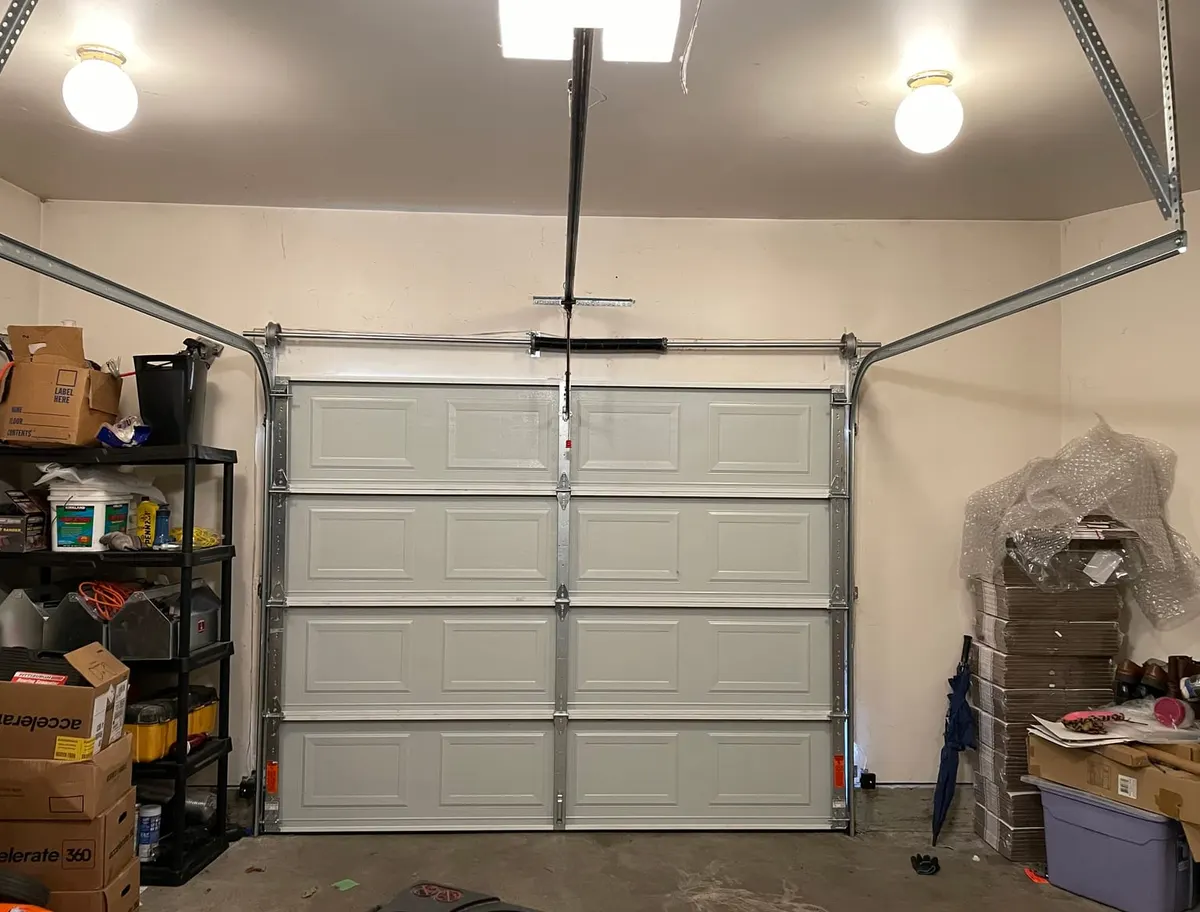
Rule of thumb: if the damage is limited to one panel, the door is less than about 10 years old, and the manufacturer still makes a matching panel, repair that one section. Outside those conditions, a full replacement usually serves you better.
That rule holds most of the time, but there are real exceptions. A door that's taken a hit from a car bumper might look like a one-panel problem until you notice the track is bent or the bottom corner has pulled away from the frame. A door that's rusted along the bottom panel from years of rain splash-back might have a single visible panel issue, but the metal underneath neighboring panels could be just as compromised. And if your door is an older steel model with a style that's been discontinued, a "simple" panel swap can turn into a weeks-long search for a part that doesn't exist anymore.
The Case for Replacing Just the Panel
Panel replacement makes sense when the damage is cosmetic or isolated: a dent from a backed-into basketball hoop, a cracked panel from a wind-thrown branch during a coastal storm, or a section warped by a specific impact. The upside is straightforward:
- Lower cost — you're paying for one section and the labor to swap it, not a full door and track system.
- Faster turnaround — if the part is in stock, this can often be done in a single visit.
- No disruption to the opener setup — your existing opener, sensors, and force settings stay untouched.
The downside is that it only works if the replacement panel matches. Garage door manufacturers update colors, textures, and panel designs over time, so a door installed 12 or 15 years ago may not have an exact match available anymore. You can end up with a visibly different panel — different sheen, slightly different color, sometimes a different rib pattern — sitting next to the rest of the door. For a lot of homeowners that's a fine trade-off for the savings. For others, especially on a home where curb appeal matters for resale, it's a dealbreaker.
The Case for Replacing the Whole Door
Full replacement is the better call when any of the following apply:
- More than one panel shows damage, rust, or warping
- The door is older and an exact panel match isn't available
- The track, hinges, or rollers show wear beyond the damaged panel itself
- You want better insulation — older non-insulated doors lose a lot of efficiency compared to current options, which matters given how cold it gets here in the winter months
- You're already planning to upgrade the opener or add smart features, since a full install is a natural point to bundle that work
The trade-offs run the other way here: higher upfront cost and a longer job, usually most of a day rather than an hour or two. But you get a uniform appearance, a warranty on the whole unit rather than a patched-in part, and — if you choose an insulated model — better performance against both summer humidity and winter cold. For homes with older housing stock in the area, where the original door might be original to the house, this is often the point where repair stops making financial sense anyway.
Side-by-Side: What Actually Changes
Cost
Panel replacement is generally a fraction of the cost of a full door, since you're paying for one component instead of a complete system. Full replacement costs more upfront but spreads that cost over a much longer service life if the rest of the door was already near the end of its own.
Appearance
A single new panel can blend in well if it's a recent model with an available match. On older or weathered doors, color and material differences become noticeable, especially in direct sunlight.
Structural Integrity
A panel repair fixes what's damaged but doesn't address wear elsewhere. A full replacement resets the whole system — panels, hardware, and often the springs — at the same time.
Energy Efficiency
Swapping one panel on a non-insulated door doesn't change the door's overall insulation. Replacing the whole door gives you the option to upgrade to an insulated model, which matters more here than in milder climates given the icy winters and humid, heat-soaked summers.
Timeline
Panel swaps are often same-day if the part is on hand. Full installations typically take longer and may need to be scheduled a few days out depending on door style and availability.
What's Typical for Homes Around Here
Given the mix of older and newer housing in Upper Marlboro, Bowie, Largo, and the surrounding communities, a lot of doors fall into one of two camps: newer doors (under 10 years) where a panel match is easy to find, or older doors where moisture exposure from heavy rain and humid summers has already started working on more than just the dented section. If your door falls in the second camp, a full inspection before committing to a panel order will save you from paying for a part that doesn't solve the underlying issue.
When to Call Upper Marlboro Door & Opener
If you're not sure which camp your door falls into, that's exactly the kind of call worth making before you order parts. We'll look at the damaged panel, check the track and rollers for related wear, and tell you honestly whether a Garage Door Repair will hold up or whether a full Garage Door Installation is the smarter spend. If springs or hardware are showing their age at the same time, we'll flag that too so you're not back here again in six months.
If you're dealing with a damaged panel on your garage door anywhere in Upper Marlboro, MD or the surrounding area, give Upper Marlboro Door & Opener a call — we'll give you a straight answer on repair versus replace before any work starts.